
A FOUR-PART STORY EXPLAINER • FICTION

Why Did Odysseus Hurt
the Cyclops Polyphemus, the One-Eyed Giant?

The blinding was an escape plan; the boasting that followed was a dangerous act of pride. This concise guide separates those choices, explains the consequences, and pairs each part of the episode with a relevant book.

Find your next book 4 answers • 4 books
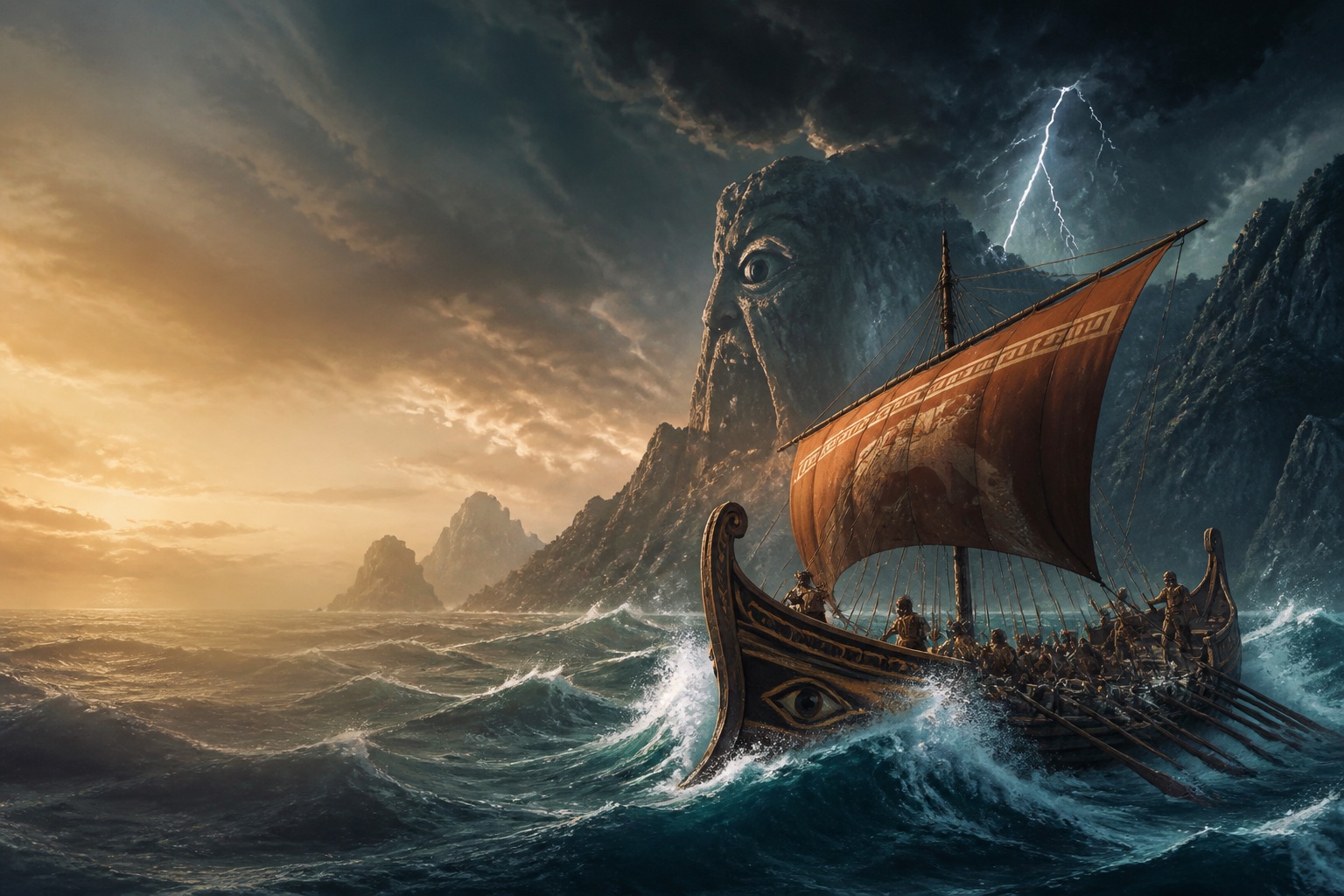
An ancient Greek ship crosses stormy water below a rocky island shaped like the one-eyed Cyclops Polyphemus.
Odysseus escapes the Cyclops through foresight, then endangers his voyage through pride.

THE SHORT ANSWER

Odysseus blinded Polyphemus so his men could escape

Polyphemus had trapped Odysseus and his crew behind a stone only the Cyclops could move, and he was eating the prisoners. Killing him would have left the survivors sealed inside. Odysseus instead blinded him, then escaped with his men beneath the sheep when Polyphemus opened the cave to let the flock out.

The injury and the later boast are different choices. Blinding Polyphemus makes the escape possible; shouting his real name after reaching the ship is driven by anger and pride. That revelation lets Polyphemus call on his father, Poseidon, to punish Odysseus and delay his homecoming.

Check the Cyclops episode in the Oxford Classical Dictionary

Follow the Cyclops episode one choice at a time

If you loved…Read…
Why Odysseus attacked PolyphemusThe immediate reason: survival
Why he blinded rather than killed himThe practical reason: the stone door
How the Nobody trick workedThe clever reason: control the response
Why the escape still went wrongThe tragic reason: pride and the curse

YOUR READING PATH

Separate the escape plan
from the fatal boast.

This guide explains the Cyclops episode as Homer tells it in Book 9 of The Odyssey. Adaptations may change the exact action or timing. It includes plot details from the encounter and its immediate aftermath, but not the epic's ending. Every recommendation and book link comes from our existing Books Like The Odyssey guide.

Your reading list0 of 4 steps saved
0%
Unbranded books, an open illustrated volume, a bronze owl, red thread, shells, and an olive branch beside the sea.
Read the original episode first, then use retellings to question its ideas about heroes, monsters, and homecoming.
01The motive

Start with the immediate reason: survival

  • Polyphemus seals the visitors in his cave and begins eating Odysseus's companions. The men are not fighting for treasure or victory at this point; they are trying to stop the killings and get out alive.
  • Odysseus plans rather than charging at a much stronger enemy. Wine, a sharpened olive stake, and the false name Nobody turn one overwhelming opponent into a problem the trapped men can solve together.
  • The cleanest answer is therefore practical: Odysseus hurts Polyphemus because disabling him is necessary for the prisoners' escape.
Books Handpicked for You
02The strategy

See why killing the Cyclops would fail

  • Odysseus briefly considers killing the sleeping Cyclops, but the huge stone across the entrance changes the calculation: only Polyphemus can move it.
  • Blinding solves both halves of the problem. Polyphemus remains alive to open the cave for his sheep, but he cannot see the men hiding beneath the animals as they pass him.
  • This is the episode's central piece of strategy. The goal is not simply to injure an enemy; it is to leave that enemy capable of opening the only exit but unable to identify the escapees.
Books Handpicked for You
03The trick

Understand what the name Nobody accomplishes

  • Before the attack, Odysseus tells Polyphemus that his name is Nobody. When the wounded Cyclops calls for help and says Nobody is harming him, the neighbouring Cyclopes hear no attacker to fight.
  • The trick buys time. It prevents Polyphemus from turning his greater community into a second barrier while Odysseus prepares the escape beneath the flock.
  • The scene also complicates the labels hero and monster: intelligence saves the survivors, but Odysseus had entered the cave expecting hospitality and later cannot resist claiming credit for the violence.
Books Handpicked for You
04The consequence

Treat the boast as a second, reckless choice

  • Once the ship is pulling away, Odysseus taunts Polyphemus despite his crew's warnings. He finally gives the Cyclops his real name, undoing the protection created by Nobody.
  • That reveal is not needed for survival. It grows from rage, wounded pride, and Odysseus's desire to be recognised as the clever man who defeated the giant.
  • Now Polyphemus can name his attacker when he prays to Poseidon. The escape succeeds, but the boast gives the victory a lasting cost and helps turn the Cyclops episode into a lesson about intelligence without restraint.
Books Handpicked for You

THE CYCLOPS EPISODE, CLARIFIED

Four quick distinctions between what Odysseus needed to do, what he chose to do, and what the story asks readers to judge.

Why didn't Odysseus simply kill Polyphemus?

Because the surviving men would still have been trapped. The stone blocking the cave was too heavy for them to move, so they needed Polyphemus alive to open the entrance when he let out his flock. Blinding him created a narrow escape route that killing him would have closed.

Was Odysseus justified in blinding the Cyclops?

Within the immediate crisis, the poem presents the blinding as the survivors' way to stop Polyphemus from eating more men and escape captivity. The wider episode is less tidy: Odysseus chose to explore the cave, Polyphemus violently rejects the duties of a host, and Odysseus later turns a necessary escape into a dangerous display of pride.

Why did Odysseus call himself Nobody?

It was a verbal trap. After Polyphemus was blinded, he told the other Cyclopes that Nobody was hurting him. They understood that no person had attacked him and left him without help, giving Odysseus and his men time to escape.

Why did Odysseus reveal his real name?

He wanted Polyphemus to know exactly who had defeated him. The boast satisfies Odysseus's pride, but it is strategically disastrous: Polyphemus can identify him to Poseidon and ask the sea god to make his return difficult. His cleverness wins the escape; his need for recognition deepens the journey's suffering.

A SHORT READING PLAN

Read the scene,
then question it.

The episode is compact enough to understand in one sitting, while the retellings let you revisit its moral questions from a different angle.

  1. 01Read the Cyclops episode in a prose retelling or Book 9 of The Odyssey.
  2. 02Mark the moment when a necessary plan becomes an unnecessary boast.
  3. 03Choose Stone Blind or The Penelopiad when you want to challenge the heroic point of view.

BOOK RECOMMENDATION LIBRARY

Choose your next
reading path.

Browse by topic or search for something you want to learn, change, or understand. Each path puts a small group of useful books in a sensible reading order.

7 reading paths found
Browse every handpicked reading path.
Fiction6 steps

11 Best Books Like The Odyssey After the Movie

Gods, monsters, dangerous voyages, doomed romance, and modern Greek mythology for anyone who left the cinema wanting another adventure. This spoiler-light guide helps you choose by the part of the story you loved most.

Explore books
Fiction4 steps

Why Did Odysseus Hurt the Cyclops Polyphemus, the One-Eyed Giant?

The blinding was an escape plan; the boasting that followed was a dangerous act of pride. This concise guide separates those choices, explains the consequences, and pairs each part of the episode with a relevant book.

Explore books
Fiction6 steps

The Odyssey Movie vs. Homer’s Book: 6 Key Differences

Christopher Nolan keeps the voyage, monsters, and return to Ithaca, but changes how the story begins, what drives Odysseus, how the gods act, and where the ending leaves him. This full-spoiler guide compares the film with Homer’s 24-book epic poem.

Explore books
Language5 steps

The best books for learning a new language

Start with a learning method, then explore sound, useful vocabulary, conversation, and progress. Each step pairs a common learner question with books that can help.

Explore books
Communication5 steps

The best books for becoming a better communicator

A five-part reading path through structured thinking, concise writing, persuasion, sound reasoning, and storytelling—with a clear reason to choose every title.

Explore books
Health4 steps

Books for understanding healthy weight management

A careful reading path through metabolism, appetite, food environments, and nutrition. These books offer perspectives for understanding—not a diagnosis, prescription, or promise of weight loss.

Explore books
Lifestyle5 steps

Books for a thoughtful, French-inspired life

A reading path through gathering, everyday movement, personal style, rest, and modern French identity—chosen to add nuance to the fantasy, not sell it as a rulebook.

Explore books