
A FOUR-STEP READING PATH • HEALTH

Books for understanding
healthy weight management, beyond willpower and quick fixes.

A careful reading path through metabolism, appetite, food environments, and nutrition. These books offer perspectives for understanding—not a diagnosis, prescription, or promise of weight loss.

Start the reading path 4 steps • 5 recommended books
A meal-planning notebook, vegetable and grain bowl, glass of water, and walking shoes on a sunlit wooden kitchen table.
Good health reading should make room for complexity, context, and ordinary life.

YOUR READING PATH

Understand the systems,
then consider your context.

This is a general-education reading list, not personal medical advice. Weight and appetite are affected by health conditions, medicines, mental health, culture, budget, food access, and many other factors; discuss significant changes with a qualified clinician.

Your reading list0 of 4 steps saved
0%
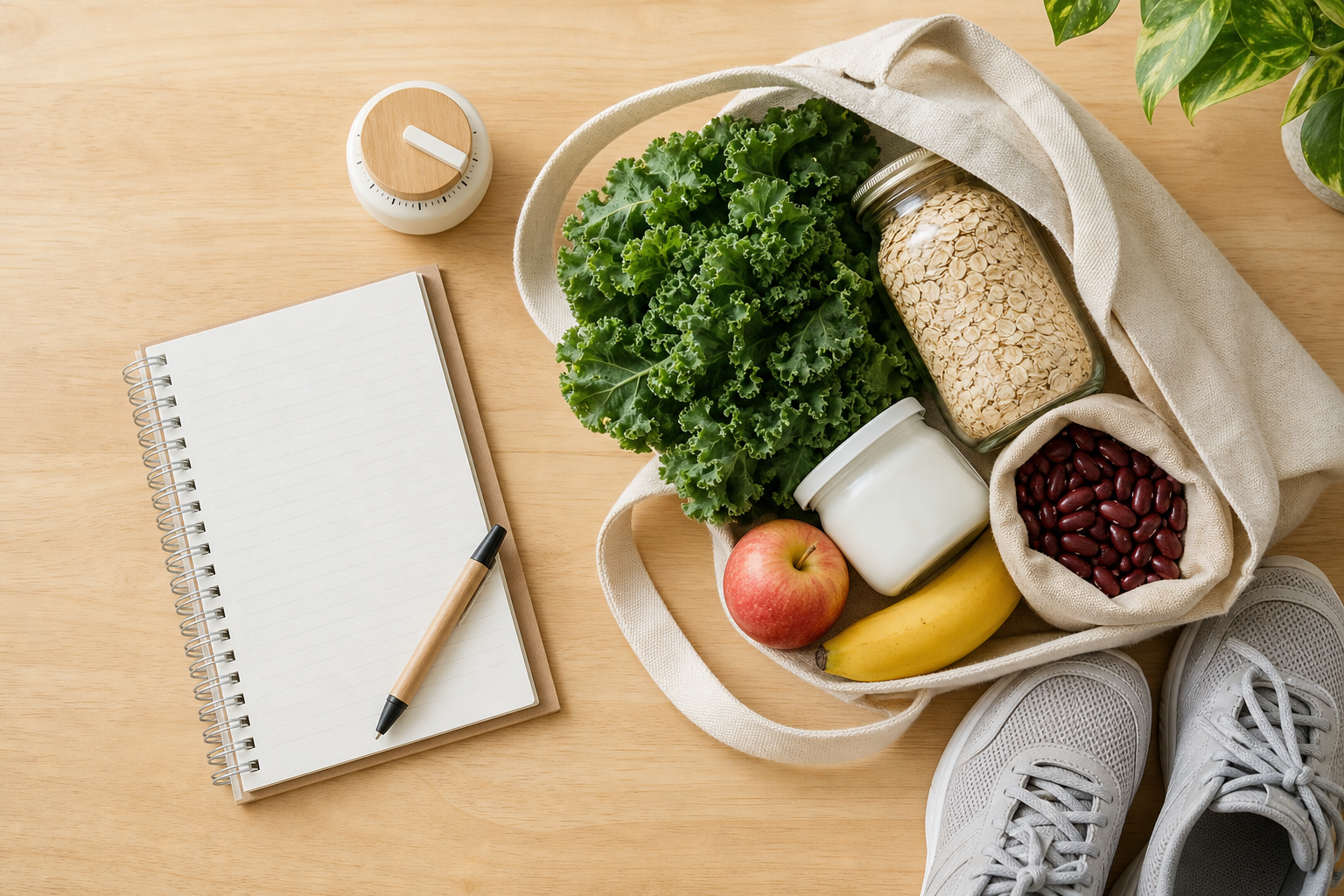
A notebook, reusable grocery bag with vegetables, beans, fruit and oats, kitchen timer, and walking shoes on a wooden table.
Use these books to ask better questions, not to build a perfect or punishing routine.
01

Start with metabolism and energy use

  • Burn is an accessible tour of human energy expenditure by evolutionary anthropologist Herman Pontzer.
  • Choose it to examine common assumptions about exercise, calories, metabolic adaptation, and why bodies do not behave like simple calculators.
  • Read its big-picture argument as one part of the evidence, then bring personal health questions to an appropriate professional.
Books Handpicked for You
02

Explore appetite and the food environment

  • Why We Eat (Too Much) offers a clinician’s explanation of appetite regulation, hormones, and weight; choose it for the physiological overview.
  • Ultra-Processed People combines self-experiment, interviews, and research reporting to examine how industrial food systems can shape what and how we eat.
  • Reading both gives you two different lenses—internal biology and external food environment—without reducing eating to personal discipline.
03

Go deeper on hunger and the brain

  • The Hungry Brain focuses on the neuroscience of hunger, reward, satiety, cravings, and body-weight regulation.
  • Choose it when you want more scientific detail than a general wellness book, especially on how brain circuits respond to food cues and environments.
  • It explains mechanisms; it does not determine the right treatment or eating pattern for an individual reader.
04

Compare a nutrition-focused perspective

  • How Not to Diet argues for a predominantly whole-food, plant-forward approach and surveys a wide range of nutrition and weight research.
  • Choose it for a detailed nutrition-centred case and practical food ideas, while noticing where its strong point of view may not match every reader’s needs.
  • Compare claims with current clinical guidance, especially if you have a health condition, a history of disordered eating, or specific nutritional requirements.

READ WITH CARE

Compare claims,
protect your wellbeing.

Health books can clarify a subject, but confident prose is not the same as consensus. Slow down around absolute claims and advice that ignores your circumstances.

  1. 01Write down the central claim and the kind of evidence the author uses.
  2. 02Compare important advice with current guidance from a trusted health body.
  3. 03Take personal treatment or dietary questions to a qualified professional.

BOOK RECOMMENDATION LIBRARY

Choose your next
reading path.

Browse by topic or search for something you want to learn, change, or understand. Each path puts a small group of useful books in a sensible reading order.

7 reading paths found
Browse every handpicked reading path.
Fiction6 steps

11 Best Books Like The Odyssey After the Movie

Gods, monsters, dangerous voyages, doomed romance, and modern Greek mythology for anyone who left the cinema wanting another adventure. This spoiler-light guide helps you choose by the part of the story you loved most.

Explore books
Fiction4 steps

Why Did Odysseus Hurt the Cyclops Polyphemus, the One-Eyed Giant?

The blinding was an escape plan; the boasting that followed was a dangerous act of pride. This concise guide separates those choices, explains the consequences, and pairs each part of the episode with a relevant book.

Explore books
Fiction6 steps

The Odyssey Movie vs. Homer’s Book: 6 Key Differences

Christopher Nolan keeps the voyage, monsters, and return to Ithaca, but changes how the story begins, what drives Odysseus, how the gods act, and where the ending leaves him. This full-spoiler guide compares the film with Homer’s 24-book epic poem.

Explore books
Language5 steps

The best books for learning a new language

Start with a learning method, then explore sound, useful vocabulary, conversation, and progress. Each step pairs a common learner question with books that can help.

Explore books
Communication5 steps

The best books for becoming a better communicator

A five-part reading path through structured thinking, concise writing, persuasion, sound reasoning, and storytelling—with a clear reason to choose every title.

Explore books
Health4 steps

Books for understanding healthy weight management

A careful reading path through metabolism, appetite, food environments, and nutrition. These books offer perspectives for understanding—not a diagnosis, prescription, or promise of weight loss.

Explore books
Lifestyle5 steps

Books for a thoughtful, French-inspired life

A reading path through gathering, everyday movement, personal style, rest, and modern French identity—chosen to add nuance to the fantasy, not sell it as a rulebook.

Explore books